Showing posts with label U33 L01. Show all posts

Thursday, 29 November 2012

Development in Animation


Pioneers:Joseph Plateau (phenakitoscope)
Animation started in 1832 when a famous pioneer Joseph Plateau and his sons introduced the spindle viewer. This was the first invention to demonstrate the illusion of a moving image. To show this he used counter rotating disks with repeating drawn images in small increments of motion on one and regularly spaced slits in the other. This was a very clever and useful invention and has managed to get us where we are today with animation.
1.png
William HornerWilliam George Horner was a British mathematician; he was a schoolmaster, headmaster and school keper, proficient in classics as well as mathematics who wrote extensively on functional equations, number theory and approximation theory, but also on opics. He invented the Zoetrope however it didn't become popular until the 1860's. The zoetrope worked on the same principles as the phenakitoscope by using rotating disks with repeating drawn images in smallincrements of motion on one and regularly spaced slits in the other.

Emile Reynaud (praxinoscope)
3.pngCharles-Émile Reynaud was a French science teacher, responsible for the first projected animated cartoon films. Reynaud created the Praxinoscope in 1877 and the Theater Optique in December 1888, and on 28 October 1892 he projected the first animated film in public, Pauvre Pierrot, at the Musée Grévin in Paris. This film is also notable as the first known instance of film perforations being used. The Praxinoscope. incorporates the principle of William George Horner's Zoetrope that used a removable strip printed in a series of 12 drawings that makeup a cyclical movement. This strip is placed inside a drum rotating about an axis used as a base. Émile Reynaud added into the drum, on the same axis, a cylinder on which are arranged 12 facets of mirrors that each reflect a drawing. A candlestick with a lampshade is placed on top of it. This allows the animation to be seen by several people at onetime. 

Edward MuybridgeEadweard 
4.pngJames Muybridge was an English photographer important for his pioneering work in photographic studies of motion and in motion-picture projection.Muybridge is known for his pioneering work on animal locomotion in 1877 and 1878, which used multiple cameras to capture motion in stop-action photographs, and his zoopraxiscope, a device for projecting motion pictures that pre-dated the flexible perforated film strip used in cinematography.

Lumier brothers
Auguste and Louis Lumiere were the earliest filmmakers in history. Auguste Louis Lumiere developed a camer that was used to create the world's first public film screening on December 28, 1895. The showing of approximately ten s hort films lasting only twenty minutes in total. It was held in the basement lounge of the Grand Cafe on the Boulevard des Capucines in Paris and would be the very first public demonstration of their device they called the Cinematograph which effectively functioned as camera, projector and printer all in one.

George Pal
6.pngGeorge Pal born György Pál Marczincsak, was a Hungarian-born American animator and film producer, was very well known for his, principally associated with the science fiction genre. He worked at UFA Studios in Berlin where he became head of the cartoon department. Then, he set up his own film studio elsewhere in Berlin. His credentials attracted orders from companies for animated advertising. Instead of the cartoon approach George developed his own take on making inanimate objects move, even dance, using the still evolving art of stop-motion photography. Some examples of Advertisements he did was for instance, Overstolz cigarettes, outfitted with faces, arms, and legs, were shown on theater screens strutting and singing as if drawn by a cartoonist. These "puppets" without strings would later evolve into animated characters made of wood who would have names and star in their own films.
 George played a massive part in developing animation. He has turned drawn animation and made it look as though its real live. By him creating this has developed animation to where it is today. Without George we wouldn’t have the high tech animation that we have now days. He  an inspiration who inspired many people; his work triggered a new ear in animation.

Dickson
Dickson developed a viewer for the films, which was called a kinetoscope. You can see from the picture that one person could only use it at a time. This did this by looking through the viewing piece at the top of the box. The film ran backwards and forwards round a series of pulleys, and was held as a continuous loop, so that it could be watched over and over again without rewinding. This was a massive jump in technoldy as it was a lot more high tech and allowed people to start viewing longer more advanced animation clips.

5.pngThompson Edison
Thomas Edison was the first person successfully to demonstrate moving pictures to the public. He designed this camera that was called the kinetograph. It used rolls of film about 35mm wide, and these film strips carried rows of holes down the sides to allow the film to be pulled through the camera at an even rate. These rows of holes still appear on both cinema film and films for use in ordinary cameras.


Developers


Wills O’Brien


Willis Harold O'Brien was an Irish American motion picture special effects and stop-motion animation pioneer, who according to ASIFA-Hollywood "was responsible for some of the best-known images in cinema history," and is best remembered for his work on The Lost World (1925), King Kong (1933) and Mighty Joe Young (1949), for which he won the 1950 Academy Award for Best Visual Effects. He started with introducing his models in animated shorts and in the original dinosaur movie. In the 1925's The Lost World, O'Brien gave American filmmakers new latitude in creatingmonstrous fantasies. He was remembered as the father of "stop-motion" animation. By him inventing and introduction animation into films inspired many animators who have now invent very cleaver was to introduce animation into films.


Ray Harryhausen


Raymond Frederick "Ray" Harryhausen (born June 29, 1920) is an American visual effects creator, writer and producer. He created a brand of stop-motion model animation known as Dynamation. Ray made his name by developing fantastic stories and creatures based on legends and mythology and creating a unique genre of fan tasty films during the 1950s, 60s and 70s that took into the movie-making world. His work hit the public, by storm. Someone one who was inspired by Raymond was Ray Harryhausen, he inspired him, as he was the beacon in today’s fantasy filmmakers as the creator who inspired them and made the impossible possible. Without Raymond we wouldn’t have the in-depth model making and ideas that inspired many animators. He took model making to the next level. He was an inspiration, without his work we wouldn’t have the animation that we have today. He designed some intriguing models, that was way out of some peoples leagues. His models was so in-depth they look so surreal which benefited the films as they made them more believable.

StopMotion Presentation


Friday, 23 November 2012

History Of Animation Timeline.


The Magic Lanten
The Magic Lantern or Lanterna Magica is an early type of image projector developed in the 17th century.
The magic lantern has a concave mirror in front of a light source that gathers light and projects it through a slide with an image scanned onto it. The light rays cross an aperture (which is an opening at the front of the apparatus), and hit a lens. The lens throws an enlarged picture of the original image from the slide onto a screen.

1833 Zoetrope
The zoetrope consists of a cylinder with slits cut vertically in the sides. On the inner surface of the cylinder is a band with images from a set of sequenced pictures. As the cylinder spins, the user looks through the slits at the pictures across. The scanning of the slits keeps the pictures from simply blurring together, and the user sees a rapid succession of images, producing the illusion of motion.

1868 Flip Book
A flip book or flick book is a book with a series of pictures that vary gradually from one page to the next, 
so that when the pages are turned rapidly the pictures appear to animate by simulating motion or some other change.

1877 Praxinoscope
The praxinoscope was an animation device, the successor of the zoetrope. Like the zoetrope, it used a strip of pictures placed around the inner surface of a spinning cylinder. The praxinoscope improved on the zoetrope by replacing its narrow viewing slits with an inner circle of mirrors, placed so the reflections appreared more or less stationary as the wheel turned.Someone looking in the mirrors would therefore see a rapid succession of images, producing the illusion of motion.

Filmstrip
35 mm filmstrip of the Edison production Butterfly Dance (ca. 1894–95), featuring Annabelle Whitford Moore, in the format that would become standard for both still and motion picture photography around the world.

1892 Cinematograph
It is a film camera, which also serves as a film projector.


1925 Felix the Cat
Felix the Cat is a cartoon character created in the silent film era. His black body, white eyes, and giant grin, coupled with the surrealism of the situations in which his cartoons place him, combine to make Felix one of the most recognized cartoon characters in film history. Felix was the first character from animation to attain a level of popularity sufficient to draw movie audiences

1928 Walt Disney's Steamboat Willie
Steamboat Willie was produced in black-and-white by The Walt Disney Studio and released by Celebrity Productions. The cartoon is considered the debut of Mickey Mouse, and his girlfriend Minnie, but the characters had both appeared several months earlier in test screenings. Steamboat Willie was the third of Mickey's films to be produced, but was the first to be distributed.
The film is also notable for being one of the first cartoons with synchronized sound. 
1937 Disney's "Snow White and the seven Dwarfs"
It is the first full-length cel animated feature in motion picture history, the first animated feature film produced in the United States, the first produced in full color, the first to be produced by Walt Disney Productions, and the first in the Walt Disney Animated Classics series.


Thursday, 22 November 2012

Disney


Disney
In 1937, the Walt Disney Studios released its first fully animated feature film, Snow White and the Seven Dwarfs, this included colour picture and synchronized sound and pioneered a new form of family amusement, this animated film was not just attracted by children, adults were entertained and amazed by this as it was the first film which anyone had seen in colour. More than seven decades later, Walt Disney Animation Studios continues to honor its heritage through animated films that combine beautiful artistry, masterful storytelling and groundbreaking technology. Walt Disney have made up to 51 animated films since 1937 to 2012.

Steamboat Willie is a 1928 American animated short film directed by Walk Disney and Ub Iwerks. It was formed in black and white by The Walt Disney Studio and released by Celebrity Productions. The animated cartoon considered the introduction of Mickey Mouse and his girlfriend Minnie, both characters had appeared some months earlier in test screenings. Steamboat Willie was the third of Mickeys films to be produced however was the first to be distributed. This film was notable for being one of the first cartoon series with synchronized sound; it was also the first cartoon to feature a fully post-produced soundtrack.
However Steamboat Willie was not the first cartoon with synchronized sound. Dave and Max Fleischer's Inkwell Studios had earlier produced seven sound cartoons, part of the Song Car-Tunes which started in May 1924, Yet the Song Car-Tunes failed to keep the sound fully synchronized, while Steamboat Willie was produced using a click track to keep his musicians on the beat. As little as one month before Steamboat Willie was released, Paul Terry's released Dinner Time, which also used a soundtrack, but Dinner Time was not a financial success, which puts Steamboat Willie at the top of all of them.

Cel animation, short for celluloid, is a transparent sheet on which objects are drawn or painted for traditional, hand-drawn animation. Actual celluloid  was used during the first half of the 20th century, but since it was flammable and dimensionally unstable it was largely replaced by cellulose acetate. With the advent of computer assisted animation production, the use of cels has been practically abandoned in major productions. Disney studios stopped using cels in 1990 when Computer Animation Production System (CAPS) replaced this element in their animation process.

In 1940, not long after Snow White and The Seven Dwarfs was released Walt Disney announced its new film to be released call Pinocchio directed by Ben Sharpsteen and Haniliton .
Here is a small synopsis of the film:
Lonely toymaker Geppetto has his wishes answered when the Blue Fairy arrives to bring his wooden puppet Pinocchio to life. Before becoming a real boy, however, Pinocchio must prove he's worthy as he sets off on an adventure with his whistling sidekick and conscience, Jiminy Cricket. From Stromboli's circus to Pleasure Island, Pinocchio is tested by many temptations, but slowly learns how to navigate right from wrong. With a few mishaps along the way, Geppetto's "little woodenhead" finally gets it right, proving that when you wish upon a star dreams really can come true!
Pixar was founded as The Graphics Group, which was one third of the Computer Division of Lucasfilm that was launched in 1979 with the hiring of Dr. Ed Catmull from the New York Institute of Technology (NYIT).
Through the help of Pixar, Diesney have produced many popular films such as ‘Toy Story’, ‘Monsters inc’, ‘Finding Nemo’, ‘Cars’ and many more films.
These have been some of there most popular films released and have influenced many other animation companies. Disney originally influenced Pixar however they then went on to develop their own ideas further, this involved them creating 2D and 3D, throughout the years this has influenced other companys to create films into 2D or either 3D dimensions.
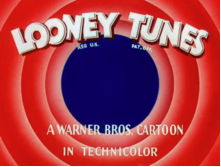
Warner Bros. Entertainment, Inc., also known as Warner Bros. Pictures or simply Warner Bros., is an American producer of film, television, and music entertainment. The first notable animations by Warner brothers was the series of Looney Tunes this was released in 1930 and has become a worldwide media franchise. The series features some of the most well-known and popular cartoon characters in history including Bugs Bunny , Daffy Duck, Porky Pig and Tweety Bird. At the same time Disney was
producing there own Mickey Mouse series with popular characters such as Mickey Mouse, Minnie Mouse, their pet Pluto, Goofy and Donald Duck. These are iconic characters as are the Looney Tunes ones, both series were deeply loved by the audiences at the time however Disney were the first makers of the colored pictures and synchronized sound.
DreamWorks Studios also known as DreamWorks, LLC, DreamWorks SKG, or DW Studios, LLC, is an American film studio which develops, produces, and distributes films, video games and television programming. It has produced or distributed more than ten films with box-office grosses totaling more than $100 million each.

Technicolor is a color motion picture process invented in 1916 and then improved over several decades. It was the second main process, after Britain's Kinemacolor, and the most broadly used color process in Hollywood from 1922 to 1952. Technicolor became known and celebrated for its saturated levels of color, and was used most commonly for filming musicals such as The Wizard of Oz and Singin' in the Rain, costume pictures such as The Adventures of Robin Hood and Joan of Arc, and animated films such as Snow White and the Seven Dwarfs and Fantasia. Since then Technicolor has improved majorly and is even used in less extravagant dramas and comedies, so even to this day Technicolor is still being used.

Disney influenced many companies from being an iconic figure in the media entertainment industry’s, all of these company were inspired by what Disney had produced in 1937 so built up there company’s to start creating there own films and series using the coloured picture and synchronized sound. Walt Disney is now a truly inspirational man around the world for what he produced especially to the company’s such as Warner Bros, DreamWorks and Pixar.


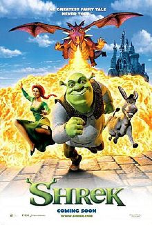
Disney inspired DreamWorks from the very beginning as they were the first company to use coloured picture and synchronizing sound, once DreamWorks were up and running they then went on to create there own films with the same effects, one of their most popular film has been ‘Shrek’ which was released in 2001.
In December 2005, the founders agreed to sell the studio to Viacom, parent of Paramount Pictures. The sale was completed in February 2006. In 2008, DreamWorks announced its intention to end its partnership with Paramount and signed a $1.5 billion deal to produce films with India's Reliance ADA Group.

Aardam Animation


Aardman Animation
 How do they create animations?
They create animations by using Stopmotion. There are many people involved with the company and they are all in charge or part of pacific roles to help produce the animated film. Whilst producing Wallace & Gromit there were many rooms in the building where the different roles would take part in their workshops.

Rigg workshop
The Rigg workshop was were they would fix and put together the props, scenery, costume, characters and puppets needed for filming.

Set dressing workshop
The set-dressing workshop is were all the vegetables, which are used throughout the film, are individually hand made by specialist who make and create model vegetables.

Art department
The art departments are in charge of the overall look of the film, this is a very important job as they are in control of the landscape, colour and props.

Production office
The production office is one of the main rooms; it’s where all the planning and organization for the film is sorted and put into place.

Animation room
The animated room is where the assistant animators work, they contain the job of preparing and making the puppets, this job takes a lot of time and commitment to get the puppets perfect.

Edit room
The editing room is where the whole film is put together to make the final piece. All the sound and voices are added in here in this room, and this is where they keep all their high top toys and gadgets for all there editing and cutting and putting together the film.

Storyboard office
The storyboard office is a really important room! It is where every single shot for the film is drawn and placed into order, in here is also the timeline where all there timing for the film is put so they know exactly what they are filming on the pacific days.


Animators 
The animators in Wallace and grommet are very high experienced animators due to the the prestigious Aardman studios. The animator is the person who creates multiple images that give an illusion of movement called animation. There are a number of animators in Wallace and grommet. The animators will work in 2D animation, 3D model-making animation, stop frame or computer-generated animation. The animators at the Aardman studios are always pushing the boundaries of the art from an exceptional sense of various acting and performance styles. They are the the artists who are used to give a story though the movements of the characters and also the movement of the camera and the way footage has been shot. 

Layout artist 
A layout artist is responsible for the overall mise-en-scene of Wallace and grommet. This is everything that appears before the camera its there job to arrange the composition of the shot, props, actors, costumes and lighting. A cinematographer’s eye and an understanding of film-making are vastly helpful for this job role; this is because they will be dealing with the visual aspect to film-making. At Aardman studios there is a huge art department for making big background landscapes; they look at architectural designs to make realistic models for the film set. There are lots of the same puppet armatures used for different scenes within Aardman studios productions, for example: Wallace & Gromit and the Curse of the Were-rabbit, for the main villain in the film the Were-Rabbit they built a skeleton like structure and then used lots of different materials on a number of the Were-Rabbit puppets made, in scenes where the character would talk or howl they used flexible and malleable materials to move the mouth. Aardman studios set a high quality level of stop motion animation that’s why there world renowned, but this is only because all of the sectors work hard and in sync with each other, in which creates a successful production. He or she arranges text and images to create a pleasing layout for readers. Layout artists will arrange the staging, blocking, and camera work.  They have to produce work (shots) in a fast-pace.


Assistant animators 
Assistant Animators- assistant animators have to assist the animation directorswith a variety of tasks in order to meet the animation deadlines and budgets. In Wallace and grommet they need to work hand-in-hand, with the animation director providing the managerial direction and the animation assistant providing any support needed.
CGI Animators- Computer-generated imagery animators are in charge of the application of computer graphics in the animation of Wallace and grommet. The visual scenes may be dynamic or static, and may be 2D or 3D, though the term "CGI" is most commonly used to refer to 3D computer graphics used for creating scenes or special effects in films and television.


Storyboard artists 
Storyboard Artists- Storyboard artists in animation render screenplays into a series of illustrations. The illustrations are vital because they help spell out what they want the film to accomplish. Not only that, but they are also important because they show everything that is required for the film. Storyboard artists relay the script in visual form. Their images are linked in a sequential fashion to convey information. Their work is important because they help the director conceptualize sequences. The storyboard is especially helpful during complex scenes. It gives the director time to create plans before filming. It also helps to eliminate on-set improvisations during complicated shots.  The storyboards are very important, as they are where the animations first begins and the first place that ideas are put onto paper.
ArchictesArchitects- the architects are in charge of the making of all the buildings in the film, they will have set people who will draw the building, this will then be passed on to a 3d designer who will put the drawing onto a 3d software. This will then be passed on to the makers who will make the building. The architects play a big part in the animation of Wallace and grommet. An example of a very well designed and well built building is the town hall. I really like this building as it is very surreal.The set and props that they use in the animation are designed in two different departments. Firstly the set is the props are made in the graphic art room in the animators department. They are in charge of making all the small props; an example of some of the props they make is the prize winning pumpkin. There is a set person that will make the groceries for the animation, this will vary from carrots to cabbages to pumpkins, every prop counts.